
Teak patio sofas are moving beyond resort terraces. In 2026, buyers will weigh comfort, construction, and weather resistance alongside appearance. Grand View Research valued the global outdoor-furniture market at approximately US$50.16 billion in 2023, reflecting broad demand for outdoor living. That figure covers many furniture types, not teak sofas alone, so it should be read as market context—not a teak-specific forecast.
Material details matter. The USDA Forest Products Laboratory’s Wood Handbook explains how wood responds to moisture and changing conditions. For shoppers, that means checking joinery, slat spacing, cushion fabric, and care instructions—not assuming teak is maintenance-free. Picture a sofa beside a rain-darkened deck: water should drain, cushions should dry, and the frame should feel stable when someone sits down. Small design choices can shape years of use.
This guide compares Teak patio sofas by frame quality, comfort, dimensions, finish, and upkeep. It will also flag trade-offs: solid teak can be costly, and natural color changes may surprise buyers expecting a uniform golden finish. One limitation deserves candor: no verifiable, attributable quotation from a teak-patio-sofa industry expert was provided, so I will not invent one. The recommendations should be checked against current product specifications and warranties. A beautiful frame is only part of the decision.
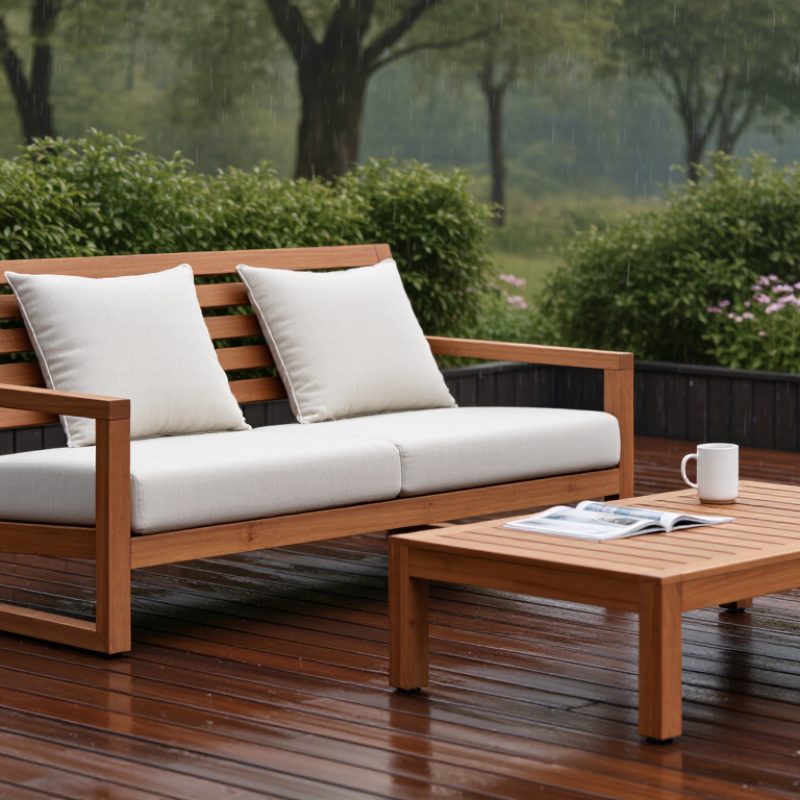
A teak patio sofa in 2026 is more than a wooden frame with outdoor cushions. The label should reflect the timber, joinery, and details that help it handle changing weather. Look for clearly identified teak, preferably heartwood, which generally offers better natural resistance to moisture and insects than paler sapwood. That distinction matters. Clear material descriptions are more useful than vague claims such as “weatherproof.”
Construction matters just as much. Tight, even joints and smooth edges can signal careful workmanship. Inspect the corners and underside, not only the surfaces on display. A sofa should feel stable when someone sits near an arm, without rocking or creaking. Small gaps between seat slats help rainwater drain and air circulate. Cushions also need quick-drying covers and removable inserts, though “quick-drying” does not mean they can stay wet indefinitely.
Unfinished teak often shifts toward a soft silver-gray outdoors; that change is natural, not damage. Suitable care can preserve a warmer brown tone, but regular oiling is optional and may add upkeep. The newest look is not automatically better. Choose a sofa that suits the patio’s exposure, leaves room to move, and feels comfortable after a long meal. Wood grading and finish claims can still be hard to compare, so ask which parts of the frame are teak and how the wood was dried.
Key Features and Construction of Teak Patio Sofas
A well-built teak patio sofa starts with carefully selected, properly dried wood. Teak’s natural oils help it handle outdoor moisture, but they do not make it maintenance-free. Look for smooth, evenly finished surfaces and sturdy joinery, such as mortise-and-tenon joints. Check the joints. They should feel tight, not wobbly. Stainless steel hardware can help resist corrosion, especially in damp or coastal settings. Slatted seats also allow rainwater to drain instead of pooling beneath cushions.
Tips: Lift a cushion and inspect the frame underneath. Ask whether the teak is solid wood and how it was dried. Confirm that replacement cushions are available in suitable outdoor fabric. A sofa may look substantial in a photograph but feel cramped on a real patio, so compare its dimensions with your space before buying.
Comfort depends on more than the wood. Seat depth, back angle, and cushion thickness all affect how the sofa feels during a long evening outside. Sit on it if possible. Check that the frame supports the seat evenly and that cushions do not slide easily. Teak gradually changes from warm brown to silvery gray when left untreated; that shift is normal, though not everyone likes it. I would not judge quality by a glossy finish alone. It can hide details worth examining.
| Sofa configuration | Typical overall width | Frame construction to look for | Seat and comfort features | Outdoor-use considerations | Best suited to |
|---|---|---|---|---|---|
| Compact 2-seat sofa | About 55–65 in (140–165 cm) | Solid teak rails and legs; secure, well-fitted joints; smooth, rounded edges at frequent contact points. | Check seat depth and back angle in person when possible. Removable cushions make cleaning and storage easier. | Teak contains natural oils and is commonly used outdoors, but weather exposure can still cause surface checking and color change. | Balconies, small patios, and compact conversation areas. |
| Standard 3-seat sofa | About 72–84 in (183–213 cm) | Look for a rigid frame, substantial support rails, and consistent joinery. Stainless-steel hardware is a practical choice in outdoor settings. | Separate seat cushions can be easier to handle than one long cushion. Confirm the usable seat width, not just the overall width. | Cushion covers should be removable and made for outdoor use. Store cushions dry when prolonged rain or seasonal weather is expected. | Everyday outdoor seating for a typical patio or deck. |
| Deep-seat lounge sofa | About 76–90 in (193–229 cm) | A sturdy frame with well-supported seat rails helps limit movement under repeated use. Inspect the underside and rear joints as well as visible surfaces. | Deeper seats support a more relaxed posture; they may feel less comfortable for shorter users unless paired with supportive back cushions. | Allow airflow around the frame and avoid leaving cushions wet against the wood. Teak naturally weathers toward a silver-gray tone if left untreated outdoors. | Lounging, reading, and covered outdoor living spaces. |
| Modular teak sofa | Varies by layout; measure each module and connector | Check that connectors hold sections securely without preventing drainage or making routine repositioning difficult. | Reconfigurable sections suit changing layouts. Verify that cushions fit each module and stay in place during use. | Plan for access to move modules and cushions under shelter. Keep wood surfaces clean and follow the maker’s care guidance. | Flexible patios, larger decks, and spaces that host groups of different sizes. |
| Teak sofa with slatted seat | Commonly within the range for its 2- or 3-seat configuration | Evenly spaced, securely fixed slats allow water to drain more readily than a solid seat. Check for smooth edges and replaceable fasteners. | Can be used with or without cushions; cushions add padding but should not block drainage when left outside. | Good drainage does not make furniture weatherproof. Periodic cleaning and appropriate protection can help maintain the surface. | Buyers who prefer a simpler frame and flexible cushion use. |
Dimensions are indicative planning ranges, not specifications for a particular product; actual measurements and construction vary by design. Teak’s outdoor performance depends on wood quality, construction, climate, and care.
Compare teak patio sofas by frame geometry before judging cushions. A low, deep lounge style invites relaxed seating, but it can feel cumbersome around a narrow table. An upright design suits meals and smaller decks. Measure the seat depth and arm height against your usual cushions; proportions that look elegant in a showroom may crowd a real balcony. Grand View Research estimated the global outdoor furniture market at $50.2 billion in 2023, projecting 5.0% annual growth from 2024 to 2030. That broad market trend says little about teak quality, but it makes careful construction comparisons worthwhile.
The USDA Forest Products Laboratory’s Wood Handbook lists teak at about 0.55 specific gravity, a useful density reference, not a promise of maintenance-free service. Check whether rails feel substantial, joints sit tight, and water can drain instead of pooling at corners. Look closely. Grade and origin matter, too; ask for clear wood-species documentation rather than relying on a warm golden finish. Natural color varies, and outdoor exposure can shift it toward silver-gray. One detail is easy to overrate: color. Compare cushion covers by fabric weight, weave, and care instructions, then inspect how they fit the frame. A snug fit looks tidy, though it may dry slowly after rain. Choose based on your climate and routine, not only the product photograph.
A teak patio sofa should fit the way you actually use the space, not just look balanced in a product photo. Measure the sofa, then leave room for people to walk around it and pull out nearby chairs. On a narrow balcony, a compact two-seater may feel more comfortable than a deep sectional. I’d measure twice; patios often look roomier on paper.
Climate matters, too. Teak contains natural oils that help it handle outdoor moisture, but it is not immune to neglect. In humid or rainy areas, choose a spot with good airflow and avoid letting water collect beneath the frame. If left untreated, teak gradually turns silver-gray; that color change is usually cosmetic, not a sign of failure. Prefer the warmer tone? Use a suitable teak treatment according to its directions. Near the coast, rinse off salt and check that the fittings resist corrosion. Cushions need their own climate plan: quick-drying foam and removable covers are useful where showers are frequent. Small detail. A covered storage spot helps during long wet spells. There is no single best finish or size; the right choice depends on your patio, local weather, and how much care you will realistically provide.
Average annual precipitation can help you compare the rain exposure a teak patio sofa may face. These approximate 1991–2020 U.S. climate normals are for selected city weather stations; your local conditions may differ. Teak is naturally weather-resistant, but a covered, well-drained spot can reduce prolonged exposure to moisture.
Source: NOAA U.S. Climate Normals, 1991–2020. Rainfall alone does not capture humidity, sun, or seasonal weather when choosing where to place outdoor furniture.
Teak patio sofas can handle years outdoors, but durability depends on care and construction, not wood alone. Dense teak naturally contains oils that slow moisture absorption. Left untreated, it usually shifts from honey-brown to silver-gray as sunlight and rain affect the surface. That change is cosmetic, not automatically a sign of damage. Patience helps.
Rain may leave dark marks where water sits, especially around joints or beneath cushions. Clean the frame with mild soap, a soft brush, and water; rinse well and let it dry fully. Avoid pressure washing, which can roughen the grain. Teak cleaners and sealers can preserve a warmer color, but they require upkeep and may change the finish. I used to think oil was essential; it is not, and poorly applied coatings can look patchy.
Check screws and fittings each season, since metal parts may corrode even when the teak remains sound. Tighten loose joints gently, and store cushions somewhere dry after wet weather. In freezing climates, use a breathable cover or move the sofa under shelter; trapped dampness can encourage mildew. Small habits matter. Let water drain from seat slats, and avoid dragging the sofa across stone, which can strain its joints. A gray surface can still be sturdy, though deep cracks or persistent wobble deserve closer inspection.
Look for clearly identified teak, tight joints, and a stable frame. Small gaps between seat slats help rain drain. No sofa is maintenance-free.
Heartwood generally resists moisture and insects better than paler sapwood. Ask which frame parts use heartwood. The description may be unclear.
Inspect the corners, underside, and joints. They should feel tight, not wobbly. Check the frame beneath a lifted cushion. Small details matter.
Yes. Untreated teak often shifts from warm brown to silvery gray. This is a natural color change, not usually damage.
Oiling is optional. It may help preserve a warmer brown tone, but it adds upkeep. I might prefer the natural gray, though preferences change.
Look for removable inserts and outdoor covers that dry quickly. Quick-drying does not mean cushions can stay wet indefinitely. Bring them in during prolonged rain.
Check the seat depth, back angle, and cushion thickness. Sit on it if possible. A photograph cannot tell you how it feels after dinner.
Compare its measurements with your available space. Leave room to walk around it, and consider nearby doors or tables. Measure twice.
Teak patio sofas combine the natural warmth of solid teak with the comfort and practicality needed for outdoor living. In 2026, a well-made sofa is defined by more than its appearance: sturdy joinery, carefully finished surfaces, supportive proportions, and weather-suitable cushions all contribute to lasting comfort. Comparing frame designs, cushion options, and complementary materials can help clarify which style best fits your preferences and the way you use your patio.
Before choosing, consider your available space, local climate, and how much maintenance you are willing to do. Teak naturally weathers over time, often developing a softer, silvery tone when left outdoors, while regular cleaning and suitable care can help preserve its appearance. Understanding these qualities makes it easier to select a sofa that balances durability, comfort, and visual appeal for years of outdoor enjoyment.