
Choosing the right Resort outdoor furniture means balancing comfort, durability, and the atmosphere guests remember. Sunlit pool decks, salty coastal air, and sudden showers all place different demands on chairs, tables, and loungers. A beautiful set can still disappoint if cushions stay damp or frames feel unstable. Small details matter.
Furniture designer Charles Eames famously said, “The details are not the details. They make the design.” His principle applies to resort settings, where materials and finishes affect both appearance and daily upkeep. Consider powder-coated aluminum for a lighter, corrosion-resistant frame, or well-finished hardwood when its maintenance needs suit your team. Check fabric specifications, cushion drainage, and replacement-part availability. Sit in the chairs, too. Comfort is hard to judge from a product photo.
Start with the site itself. Measure walkways and dining areas, note hours of direct sun, and observe where wind pushes loose cushions. Ask suppliers about warranties and cleaning instructions, then compare those details with your staffing and maintenance routines. These checks do not guarantee a perfect purchase. They reduce avoidable surprises. Looks aren’t enough.
There is a trade-off worth admitting: the most durable option may not feel the warmest, and the lowest-priced set may cost more to maintain. Guest needs also vary. Families, couples, and poolside diners use outdoor spaces differently. This guide explores how to assess materials, comfort, style, safety, and long-term value, so your Resort outdoor furniture fits the setting—not just the showroom.
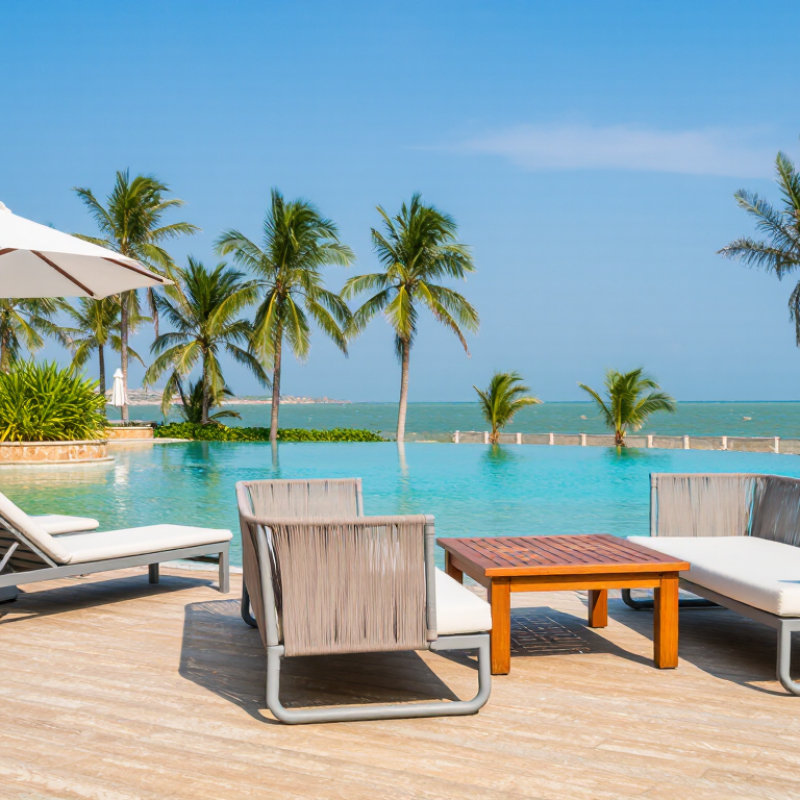
Resort furniture serves guests throughout long days, changing weather, and frequent cleaning. Start by mapping how each area is used. Poolside loungers need quick-drying surfaces and stable frames; dining chairs should slide easily without blocking busy walkways. Measure clearances, too. A spacious patio can feel crowded once chairs are pulled out.
Climate and upkeep matter as much as appearance. Strong sun can fade some fabrics, while salt air and pool chemicals may wear down finishes. Ask suppliers for care instructions and material specifications, then compare them with your cleaning routine. Consider who will move, stack, and inspect the furniture. A sturdy item may still be impractical if staff struggle to handle it. Small details count.
Tip: Test a sample outdoors for several days. Check comfort at midday, wipe off spills, and look for heat buildup or fading. Keep notes; memory is unreliable.
Guest needs vary, and a single seating style rarely suits everyone. Mix loungers, upright chairs, and tables at different heights, while leaving clear routes between them. Check that cushions stay in place and surfaces feel comfortable in direct sun. One planning blind spot is choosing only by appearance. Even careful testing cannot predict every season, so review wear after opening and adjust the mix where guests actually gather.
How to Choose the Best Resort Outdoor Furniture
Assessing Climate, Space, and Guest Use
Start with the site’s actual weather, not a broad regional label. NOAA’s 1991–2020 Climate Normals provide 30-year temperature and precipitation baselines for U.S. locations. Check them alongside local wind, salt exposure, and afternoon sun. The EPA reports that very heavy precipitation in the Northeast rose 60% from 1958 to 2021. That regional trend is a useful warning, not a substitute for local records. Choose finishes and cushions suited to the site, and plan where furniture can dry or be stored. A shaded patio can still get soaked sideways.
Measure circulation before selecting table sizes. The U.S. Access Board specifies a 36-inch minimum clear width for accessible routes. Keep that path open, then test the layout with chairs pulled out and serving carts in motion. Match seating to real guest behavior: loungers near pools, sturdy dining chairs by restaurants, and smaller conversation groups in quiet corners. Peak use matters more than an empty showroom. It is easy to underestimate how much space a occupied terrace needs.
Tips: Mark layouts with tape and walk them at busy times. Check glare at 3 p.m. Ask housekeeping which surfaces slow cleaning. One mistake is buying too many seats; some open space makes the area feel calmer. Don’t assume guests will move furniture back. Choose pieces staff can handle safely.
Assess climate, available space, and how guests will use each area. These ADA dimensions are useful accessibility benchmarks when planning outdoor seating.
The chart shows the minimum clear width for an accessible route, the maximum permitted height for an accessible dining surface, and the minimum diameter for a circular turning space. Dimensions are ADA Standards benchmarks; verify applicable local requirements. Climate durability and guest capacity should also guide furniture selection.
Sources: 2010 ADA Standards §§ 304.3.1, 403.5.1, and 902.3.
At a resort, outdoor furniture faces strong sun, sudden rain, sunscreen, and constant movement. Material choice matters, but no option is maintenance-free. Teak weathers well, though its color changes and occasional care may be needed. Aluminum is light and resists rust, but thin frames can flex with repeated use. Coated steel feels sturdy; scratches in its finish can leave metal vulnerable to moisture. Quality synthetic weave and dense plastic boards suit damp areas, but check their UV resistance and how hot they become in direct sun.
Construction often reveals more than a product photo. Examine joints, welds, fasteners, and the underside of each piece. Gaps that trap water can encourage corrosion or wear, while smooth drainage paths help furniture dry faster. Sit in a chair and shift your weight. Not always obvious. A slight wobble may worsen on uneven patio stone. Cushions need tight seams, quick-drying filling, and removable covers that staff can clean without fuss.
Durability also depends on the setting. Poolside pieces face chlorine splashes and wet towels; coastal furniture may need corrosion-resistant hardware and frequent rinsing. Ask whether replacement feet, slats, or cushion covers are available, since one damaged part should not force a full replacement. A finish that looks flawless in a showroom can still scratch during daily chair stacking. I would test a sample through a full cleaning cycle before ordering for an entire terrace.
At a resort, comfort must last beyond a quick showroom test. Sit for ten minutes, then check whether the seat edge presses into your thighs. Feel the edges. Look for supportive backs, stable armrests, and cushions that dry quickly after a splash. One caveat: comfort is personal, and a deep lounge chair may frustrate guests who need easier entry and exit. Test furniture with different body types and mobility needs before ordering.
Safety deserves the same attention as appearance. Check for wobble on the actual patio surface, not only a level showroom floor. For plastic outdoor chairs, ASTM F1561 sets performance and testing requirements. Request documentation and clear load limits; do not assume a heavy-looking chair is stable. Inspect exposed fasteners and sharp corners, especially where guests walk barefoot.
Maintenance can quietly decide whether a set remains usable through busy seasons. The USDA Forest Products Laboratory’s 2021 Wood Handbook (FPL-GTR-282) notes that wood-decay fungi generally require moisture content above roughly 20 percent. That makes drainage, drying time, and protective finishes practical selection criteria. Ask how often finishes need renewal and whether cushion covers can be removed. I would still test the cleaning routine on a sample; product-care claims can sound simpler than real spills.
Resort furniture should feel connected to the property, not dropped into it. A coastal retreat may suit pale, textured finishes, while a garden hotel might call for darker frames and softer shapes. Start with the colors, materials, and lines already present in outdoor spaces. Then check how furniture looks beside actual paving, plants, and shade structures. A finish that seems elegant in a catalog can feel harsh under midday sun.
Set a budget around the full cost of ownership, not just the purchase price. Include delivery, assembly, replacement cushions, cleaning supplies, and likely repairs. In busy pool areas, quick-drying cushions and sturdy, easy-to-clean surfaces can reduce staff workload. That matters. But choosing the cheapest option can backfire if chairs wobble after frequent use. Ask suppliers about material care, expected wear, and warranty terms, then compare those details consistently.
Buy a small sample group before furnishing every terrace. Let staff and guests use it through ordinary service hours, and note what gets moved, stained, or avoided. One detail is easy to miss: a beautiful chair may be too heavy for staff to rearrange between breakfast and dinner. Even a careful plan can miss something. Review the test honestly, including choices that looked better on paper than they worked outdoors.
Check local rain, wind, salt exposure, and afternoon sun. Regional averages can miss sideways rain on a shaded patio. Plan where cushions can dry or be stored.
Keep accessible routes at least 36 inches wide. Test the layout with chairs pulled out and serving carts moving. Mark it with tape. Walk it during busy hours.
Teak handles weather but changes color and may need care. Aluminum is light, though thin frames can flex. Coated steel feels sturdy, but scratches may expose it to moisture.
Check joints, welds, fasteners, and undersides for trapped water or rough edges. Sit down and shift your weight. A small wobble can grow on uneven patio stones.
Match seating to how guests use each area. Place loungers near pools and sturdy dining chairs by restaurants. Test comfort with different body types and mobility needs.
Choose tight seams, quick-drying filling, and removable covers. Ask housekeeping to test cleaning with a real spill. Care claims can sound simpler than daily work.
Test chairs on the actual patio, not just a level floor. Request clear load limits and testing documents. Inspect sharp corners and exposed fasteners, especially in barefoot areas.
Look for drainage paths and finishes suited to the site. Ask whether replacement feet, slats, or cushion covers are available. Test a sample through a full cleaning cycle. I would not skip that step.
Choosing the best Resort outdoor furniture begins with understanding how the space will be used and what guests need from it. Consider the local climate, available space, and expected level of use when deciding on furniture types and layouts. Pieces for sunny poolside areas may need different features from seating placed on a covered terrace, while busy communal spaces call for sturdy, practical designs.
Compare materials, construction, and expected durability, and consider comfort, safety, and ease of maintenance. Weather-resistant finishes, stable frames, and simple-to-clean surfaces can help furniture remain inviting through frequent use. Finally, select colors, shapes, and styles that complement the resort’s design without exceeding its budget. A thoughtful balance of function, appearance, and long-term upkeep can create welcoming outdoor areas that serve both guests and staff well.