
Buying Poolside wicker sunbeds is not merely a style decision. It affects comfort, maintenance, safety, and long-term value. A sunbed may look elegant beside blue water, yet fail after one wet season. That mistake is common.
Grand View Research reports that the global outdoor furniture market is expanding steadily, supported by hospitality investment and residential outdoor living. The report also highlights growing interest in durable, weather-resistant materials. These trends matter because poolside furniture faces intense sunlight, splashing water, chlorine residue, and frequent movement. Wicker quality alone does not tell the whole story. The frame, cushion filling, fabric, drainage, and hardware deserve equal attention.
Industry guidance from the American Society for Testing and Materials, including outdoor furniture performance standards, emphasizes structural strength, stability, and resistance to environmental stress. Buyers should also examine care instructions and supplier testing evidence. Look closely at the weave. Tight synthetic rattan should feel consistent, without sharp strands or loose edges. Lift the bed. A lightweight frame may be convenient, but excessive flexibility can suggest weaker construction.
Details matter.
This guide presents 10 practical tips for comparing Poolside wicker sunbeds, from frame materials and UV protection to reclining mechanisms and warranty terms. It also considers hospitality use, where furniture may be moved dozens of times daily. Some recommendations may seem obvious. They are still easy to overlook. Even experienced buyers can focus too heavily on appearance and underestimate drainage or replacement-part availability. A careful purchase balances visual appeal with measurable performance, realistic maintenance, and verified supplier claims.
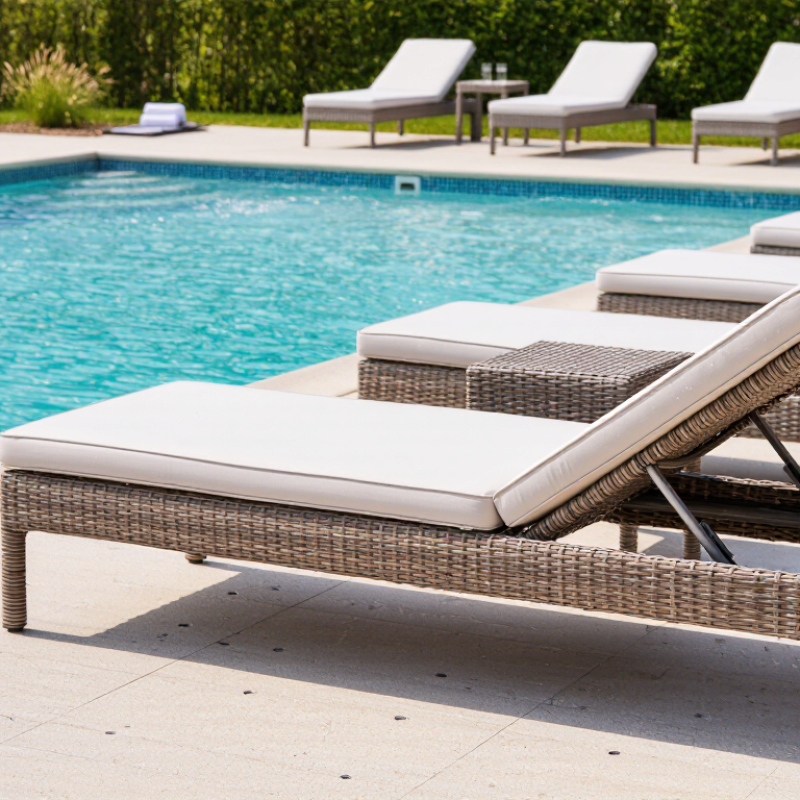
Before choosing a poolside wicker sunbed, measure the space around your pool. Leave at least 60 centimetres behind each sunbed for walking and adjustment. Mark the layout with tape on the paving. This reveals awkward corners, blocked pathways, and harsh afternoon glare. A beautiful lounger can feel impractical when guests cannot pass comfortably.
Consider how you will use the sunbed. A reclining backrest suits reading, while a flat profile works better for naps. Check the frame, woven surface, cushion fabric, and weight capacity. Reliable specifications should identify weather-resistant materials, drainage, UV protection, and cleaning requirements. Wicker should feel tightly woven, not brittle or loose. Test the hinge several times. It should move smoothly without pinching fingers.
Set the budget before comparing designs. Include cushions, protective covers, delivery, and replacement parts. Low prices can hide weak frames or fabrics that fade quickly. Higher prices are not automatically better. Compare construction details and warranty terms instead. Choose finishes that suit your pool deck, but remember that pale cushions show sunscreen marks quickly. I once underestimated storage space; that mistake made winter care inconvenient. A simple cover helps, although it cannot replace dry, ventilated storage. Leave room for maintenance in both your budget and schedule.
Define your poolside space, sunbed needs, and available budget before you buy.
A typical sunbed is about 2.0 m long and 0.75 m wide. Allow at least 0.6 m for comfortable access.
Indicative planning ranges are $300–$500 for basic models, $500–$900 for mid-range models, and $900–$1,500 for premium construction, before delivery.
Compare frame materials, weather resistance, cushion drainage, adjustability, storage needs, and the number of people using the poolside area.
The chart uses practical planning measurements for one sunbed: a 2.0 × 0.75 m product footprint, a 0.6 m access strip, and a 0.5 × 0.5 m side-table area. Confirm local dimensions and prices before purchasing.
Buying a poolside wicker sunbed requires more than matching cushions to tile. The weave determines how the bed handles sunlight, splashes, and daily movement. Natural rattan feels warm and authentic, but it absorbs moisture and needs sheltered storage. High-density polyethylene wicker usually resists water better, although poor formulations can fade or become brittle. Check the material specification, not just the word “wicker.”
Frame strength matters under repeated reclining and shifting weight. Look for welded or reinforced joints, stable leg geometry, and a clearly stated load capacity. Powder-coated aluminum resists rust and remains relatively light. Galvanized or stainless steel can offer greater rigidity, but exposed fasteners may still corrode near saltwater. The 2024 Grand View Research outdoor furniture analysis valued the global market at about 22 billion U.S. dollars, showing strong demand but not guaranteed quality. Market growth is not a durability certificate.
Weather testing deserves careful questions. ASTM G154 and ISO 4892-3 describe laboratory methods for accelerated UV exposure, while ASTM D4258 can help assess plastic surface preparation. Ask whether the wicker was tested for color change, cracking, and tensile strength after exposure. A 2023 NOAA climate report recorded unusually high global temperatures, reminding buyers that outdoor materials face harsher conditions. Drainage holes under cushions are useful. Small details matter. I once trusted a thick-looking weave and ignored weak corner joints; that mistake made the sunbed wobble within one season. Compare test evidence, warranty terms, and your actual pool environment before choosing.
Buying a poolside wicker sunbed requires more than choosing an attractive frame. Comfort depends on seat depth, back support, and the space between the slats. Sit on the bed for several minutes if possible. Your shoulders should relax, not slide forward. A firm base feels supportive, but excessive hardness becomes uncomfortable under strong sunlight. Adjustable backs are useful for reading, resting, or lying flat. Check whether each position locks smoothly. Wobbly hinges can become irritating after repeated use.
Cushion quality deserves close inspection. Look for dense foam, even stitching, and fabric that feels tightly woven. Thicker cushions are not always better. Poor ventilation may leave moisture trapped after swimming. Removable covers make cleaning easier, while quick-drying filling helps after unexpected rain. Test the cushion edges too. They should not collapse when you sit down. Water-resistant fabric helps, but it does not replace proper drying.
Measure the sunbed beside your pool before buying. Leave enough room to walk around it safely. A wide frame may look luxurious but restrict movement on a narrow deck. Check the wicker surface for sharp strands, loose wrapping, or uneven color. These small flaws often reveal rushed construction. I once underestimated cushion weight and found moving the bed difficult. That mistake changed my preference for lighter frames and recessed handles. Also inspect the feet, because stable contact matters on wet tiles.
10 Tips for Buying Poolside Wicker Sunbeds?
Measure the deck before shopping. Include space for side tables, walking paths, and fully reclining backs. A sunbed that fits indoors may feel cramped beside a pool. Check the seat height too, especially if older users need easier access. Confirm the maximum load, frame material, and cushion dimensions. Aluminum frames resist rust, but fasteners still need inspection.
Pool water, sunscreen, and chlorine can shorten the life of woven fibers. Choose weather-resistant wicker and removable, quick-drying cushions. Look for drainage gaps beneath the seat. Clean dust with mild soap and water, then let every surface dry completely. Avoid harsh solvents. I once ignored a small rust mark on a fastening plate, and it spread faster than expected. That mistake changed my inspection routine.
Read the warranty before paying. Check coverage periods, exclusions, fabric fading limits, and whether commercial use is excluded. Keep the receipt and assembly instructions. Product safety matters more than attractive photographs. Look for stable legs, rounded edges, secure reclining hinges, and clear weight guidance. Ask whether materials have been tested for outdoor use. A poorly balanced sunbed can shift on wet tiles. Add non-slip feet if the manufacturer permits them. Be cautious with vague safety claims; detailed specifications are more useful than polished promises.
| No. | Buying Dimension | What to Check | Practical Reference Point | Why It Matters |
|---|---|---|---|---|
| 1 | Overall Size | Measure the available deck or patio area, including access routes and clearance around the sunbed. | Compare the product’s assembled length, width, and height with the usable space; do not rely only on packaging dimensions. | A correctly sized sunbed improves circulation, access, and safe movement around the pool. |
| 2 | Weight Capacity | Look for a clearly stated maximum user weight and check whether it applies to one person or the complete seating surface. | Choose a product whose published capacity exceeds the expected combined load of users, cushions, and accessories. | A stated load rating helps prevent frame deformation and supports safer everyday use. |
| 3 | Wicker Material | Identify whether the weave is natural rattan or synthetic resin wicker and inspect the strands for consistent spacing. | For exposed poolside use, synthetic resin wicker is generally easier to clean and less vulnerable to routine moisture than natural rattan. | Material selection affects moisture tolerance, appearance, repair needs, and service life. |
| 4 | Frame Construction | Check the frame material, joints, welds, fasteners, and whether the structure rocks when placed on a level surface. | A corrosion-resistant frame finish is preferable near chlorinated or saltwater environments; all legs should contact the floor evenly. | Sound construction reduces wobbling, premature corrosion, and stress on the woven surface. |
| 5 | Cushion and Fabric | Review the cushion cover fabric, zipper quality, filling, drainage, and whether the covers can be removed for washing. | Prefer quick-drying, solution-dyed, or outdoor-rated fabric with removable covers and clearly stated cleaning instructions. | Pool water, sunscreen, sunlight, and humidity can accelerate staining, fading, and mildew if moisture remains trapped. |
| 6 | Cleaning Requirements | Confirm which cleaners are permitted and whether the product can be rinsed with fresh water. | Routine care should normally involve removing debris, wiping with mild soapy water, rinsing, and allowing the item to dry fully. | Following the care instructions helps protect the weave, finish, fabric, and fasteners from avoidable damage. |
| 7 | Weather and UV Exposure | Check the product’s outdoor-use guidance, UV resistance information, and recommended storage conditions. | Use a breathable protective cover and store cushions in a dry, ventilated location during severe weather or extended non-use. | UV radiation, standing water, frost, and strong wind can shorten the life of outdoor furniture. |
| 8 | Adjustability and Stability | Test the backrest, locking mechanism, wheels, and any adjustable sections for smooth operation and secure positioning. | Moving parts should lock firmly, pinch points should be minimized, and wheels should not roll unexpectedly on the intended surface. | Stable adjustments reduce the risk of sudden movement, trapped fingers, or falls while entering or leaving the sunbed. |
| 9 | Warranty and Spare Parts | Read the warranty duration, coverage exclusions, claim process, and availability of replacement cushions, covers, feet, wheels, and fasteners. | Confirm whether damage from weather, commercial use, improper cleaning, normal wear, or unauthorized modifications is excluded. | Clear after-sales terms make repair or replacement decisions more predictable. |
| 10 | Product Safety | Inspect for sharp edges, exposed screws, unstable legs, loose weave, flammable-material warnings, and accessible safety instructions. | Follow the applicable consumer-product requirements in the purchase location and never place the sunbed where it obstructs pool exits or walkways. | A safe layout and defect-free product help reduce trip, cut, entrapment, and fall hazards around wet surfaces. |
Note: Always follow the manufacturer’s assembly, care, weight-limit, storage, and safety instructions. Poolside furniture should be kept clear of pool access points and checked regularly for loose, damaged, or corroded parts.
Buying a poolside wicker sunbed requires more than admiring its color and shape. Price comparisons should include the frame, cushion, delivery, warranty, and possible assembly costs. A very low price can hide thin wicker, weak joints, or poor weather resistance. Check whether the frame uses treated metal or another rust-resistant material. Measure your poolside space carefully before ordering.
Seller reliability matters just as much. Look for clear product dimensions, material details, return conditions, and reachable customer service. A dependable seller answers practical questions before payment. Ask about replacement cushions and delivery damage procedures. I once overlooked shipping restrictions and faced an avoidable delay. That mistake changed how I compare online sellers.
Customer feedback can reveal details that product photos cannot show. Read recent reviews, especially those with outdoor photographs. Notice repeated comments about fading, unstable legs, water drainage, or difficult assembly. One angry review may be unusual, but repeated complaints deserve attention. Give more weight to verified purchases and detailed experiences than short five-star ratings. Reviews are useful, not perfect. People use sunbeds differently, and some comments lack long-term evidence. Compare several sources before trusting one seller or one attractive price.
Natural rattan looks warm but absorbs moisture. It needs sheltered storage. High-density polyethylene wicker usually handles splashes better. Check the full material specification.
Look for welded or reinforced joints. Stable legs matter during repeated reclining. Confirm the stated load capacity. A thick frame can still have weak corners.
Powder-coated aluminum is light and resists rust. Galvanized or stainless steel can feel more rigid. Exposed fasteners may corrode near saltwater.
Ask about UV testing for fading, cracking, and strength loss. Inspect drainage holes beneath the cushions. Small details matter.
It can hide thin wicker, weak joints, or limited weather resistance. Compare the frame, cushions, delivery, warranty, and assembly costs together.
Ask for exact dimensions and material details. Check return conditions and customer-service access. Ask about replacement cushions and delivery damage procedures.
Recent outdoor photographs can reveal fading, unstable legs, and drainage problems. Repeated complaints deserve attention. Short five-star ratings show very little.
Give more weight to verified purchases and detailed experiences. Remember, people use sunbeds differently. Reviews help, but they are not perfect.
Measure the full poolside area before ordering. Include walking space and reclining clearance. I once ignored delivery limits and caused an avoidable delay.
Do not trust appearance alone. I once admired a thick weave but ignored weak corner joints. The sunbed began wobbling within one season.
Choosing the right Poolside wicker sunbeds begins with understanding your outdoor space, relaxation habits, and budget. Measure the available area carefully, consider how many sunbeds you need, and leave enough room for movement around the pool. When comparing options, examine the wicker material, frame construction, and resistance to sunlight, moisture, and changing weather conditions. A durable design should remain stable and attractive with regular outdoor use.
Comfort is equally important, so look for adjustable backrests, supportive structures, breathable surfaces, and cushions made with suitable outdoor fabrics. Before purchasing, check the sunbed’s dimensions, cleaning requirements, warranty coverage, and safety information. Finally, compare prices from reliable sellers and read customer feedback for practical insights into assembly, durability, comfort, and long-term performance. Taking time to evaluate these details will help you select poolside furniture that suits your space, remains easy to maintain, and provides a comfortable place to rest for many seasons.