
0%

Choosing an Outdoor patio furniture manufacturer is not simply a matter of comparing catalog prices. It affects comfort, maintenance, safety, and the lifespan of every chair and table you install.

Richard Schultz, the American designer behind the 1966 Outdoor Collection, once explained, “Furniture should be able to live outdoors.” His principle remains useful today. A serious manufacturer should understand sunlight, rain, humidity, wind, drainage, and daily commercial use. Ask what aluminum alloy, stainless steel, powder coating, fabric, and wood treatments the company uses. Vague answers deserve caution.

Look closely at construction details. Welds should appear even. Table legs should sit firmly on uneven paving. Cushions need quick-drying foam, not merely attractive fabric. Request laboratory testing, warranty terms, replacement-part access, and realistic delivery times. A reliable Outdoor patio furniture manufacturer should provide samples, technical documents, and clear care instructions.

Do not trust polished photographs alone. Visit a showroom if possible. Touch the frame. Sit in the chair. Check whether water can escape after a storm. Small details matter.

Experience also reveals uncomfortable truths. Even premium furniture can fade, loosen, or stain when maintenance is ignored. We may overvalue appearance during selection. That mistake becomes expensive later.

Compare suppliers by material knowledge, production consistency, customization ability, and after-sales support. Review projects exposed to climates similar to yours. Speak with previous buyers, not only sales representatives. The best choice is rarely the cheapest quotation. It is the manufacturer that can explain every outdoor decision clearly and stand behind the product after installation.
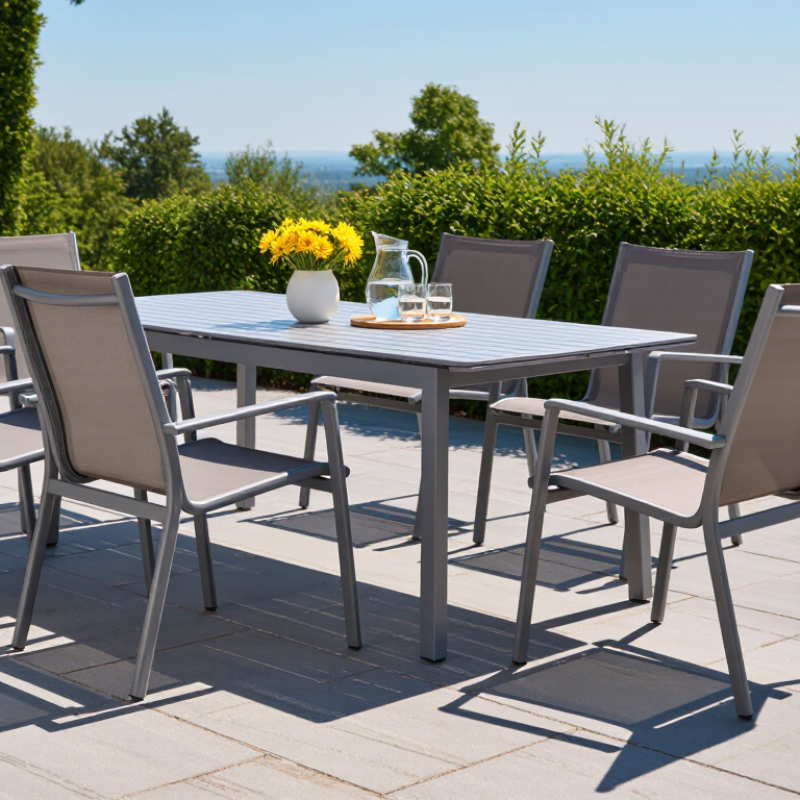
10 Tips for Choosing an Outdoor Patio Furniture Manufacturer

Define Your Patio Furniture Requirements and Outdoor Space

Define Your Patio Furniture Requirements and Outdoor Space

Before contacting an outdoor patio furniture manufacturer, measure the space carefully. Record length, width, ceiling height, door swings, and drainage points. Leave at least 90 centimeters for comfortable walking routes. Mark afternoon shade and areas exposed to strong wind. These details affect frame weight, cushion fabrics, and table proportions.

Tip: Draw a simple plan before requesting quotations. Add dining zones, lounging areas, planters, and service paths. A beautiful layout can still fail when chairs hit walls. In practice, many buyers underestimate clearance around reclining seats. I have seen usable space disappear after one oversized sofa arrives. Recheck every measurement.

According to Grand View Research, the global outdoor furniture market was valued at approximately 19.8 billion US dollars in 2023. Its report also projects continued growth through 2030. This expansion increases product choice, but not every design suits every climate. The U.S. Environmental Protection Agency recommends considering local heat, moisture, and sun exposure when selecting durable outdoor materials. Ask manufacturers about corrosion resistance, UV testing, replacement parts, and maintenance requirements. Request physical samples when possible. Digital colors can mislead. Tip: Share your completed site plan, climate conditions, target capacity, and storage limits with each manufacturer. Then compare specifications, not only prices. A lower quote may exclude protective covers, reinforced joints, or suitable outdoor-grade fabric. Your requirements should be written down. Otherwise, small assumptions become expensive revisions.

Evaluate Manufacturer Experience, Materials, and Product Quality

Choosing an outdoor patio furniture manufacturer requires more than comparing catalog prices. Experience matters because outdoor products face sunlight, rain, salt air, and repeated movement. Ask how long the factory has served commercial or residential projects. Request installation photos, test records, and references from similar climates. A polished showroom can hide weak production controls.

Tip: Inspect the materials closely. Look for powder-coated aluminum, kiln-dried hardwood, solution-dyed fabric, and corrosion-resistant fasteners. Ask about coating thickness, wood moisture levels, fabric colorfastness, and drainage design. Grand View Research projects the global outdoor furniture market to grow at about 5% annually through 2030. That growth increases supplier choices, but it does not guarantee durability.

Tip: Evaluate quality before placing a large order. Request a sample chair and examine welds, frame alignment, stitching, edge finishing, and hardware movement. Test it on uneven paving. Small details reveal factory discipline. The BIFMA sustainability standard emphasizes material transparency, durability, and responsible manufacturing practices. Ask whether the manufacturer follows applicable performance testing methods, not merely internal inspections.

Tip: Review the quality agreement carefully. It should define acceptable color variation, load testing, packaging protection, replacement parts, and warranty response times. I would also inspect a packed shipment, because cartons often expose weak planning. My own mistake was trusting a sample without checking spare-part availability. That decision created avoidable delays. Experience helps, but documented controls matter more.

10 Tips for Choosing an Outdoor Patio Furniture Manufacturer

Illustrative 100-point procurement scorecard emphasizing manufacturer experience, materials, product quality, testing, and service.

Use the weighting as a practical screening framework. Request documented production experience, material specifications, weathering and corrosion-test results, quality-control procedures, certifications, warranty terms, production capacity, and after-sales support before making a final decision.

Check Customization Options, Production Capacity, and Certifications

10 Tips for Choosing an Outdoor Patio Furniture Manufacturer

Customization should begin with practical questions, not attractive catalog photos. Ask whether the manufacturer can adjust frame dimensions, cushion thickness, fabric colors, and packaging. Request material samples before approving a design. Outdoor finishes may look different under strong sunlight. A reliable supplier should provide drawings, sample approvals, and clear revision records. I prefer testing one complete chair first. It reveals weak joints, uneven coatings, and uncomfortable angles early.

Production capacity affects delivery reliability and product consistency. Ask about monthly output, available equipment, staffing, and peak-season schedules. A factory may claim large capacity, but its actual workspace can tell another story. Check welding stations, powder-coating areas, storage racks, and quality checkpoints. I once trusted a capacity figure without checking seasonal orders. The delivery became difficult. That mistake taught me to request recent production records and a realistic backup plan.

Certifications deserve careful verification. Ask for current certificates, testing reports, issuing organizations, and covered product models. Confirm that the documents match the materials and markets involved. For outdoor furniture, useful evidence may include corrosion resistance, fabric performance, structural strength, and chemical safety testing. Do not accept a logo on a website as proof. Contact the issuing body when possible. Keep copies of inspection reports, factory audit results, and corrective-action records. Small details matter.

Compare Pricing, Minimum Orders, Warranties, and Delivery Terms

When comparing outdoor patio furniture manufacturers, start with a quote that shows the whole cost. A low chair price may exclude cushions, protective covers, tooling, packaging, or freight. Request an itemized quotation with currency, payment stages, sample charges, and validity dates. Then compare equivalent specifications, including aluminum grade, fabric density, coating process, and carton size. Ask whether the price changes after sampling. It happens.

Minimum order quantities can quietly reshape your budget. Check MOQ by style, color, and finish, not only by total units. A factory may accept 100 tables but require 300 units for one custom finish. Ask about mixed-container options and reorder quantities.

Small trial orders cost more per unit, yet they can expose weak welds or unstable finishes before a large commitment. Do not ignore that trade-off.

A warranty should name coverage, duration, exclusions, and claim evidence. For outdoor products, ask how rust, fading, cracking, loose joints, and shipment damage are handled. Clarify whether replacement parts, labor, or shipping are included.

Delivery terms need equal precision. Confirm production lead time, inspection timing, shipping responsibilities, and packaging standards.

I would request a pre-shipment inspection, but I would not treat it as perfect protection. A missed season can cost more than a slightly higher quote. Keep every promise in the purchase contract, not in chat messages.

Verify Manufacturer Reputation Through Reviews and Direct Communication

10 Tips for Choosing an Outdoor Patio Furniture Manufacturer

Verify manufacturer reputation through independent reviews, trade feedback, and direct communication. Do not trust star ratings alone. Read recent comments about frame strength, finish quality, packaging, and delivery accuracy. Look for repeated details, such as rust appearing after one rainy season. Verified buyer photos can reveal uneven welds or faded fabric. A polished website proves very little.

Tip: Contact the manufacturer before requesting a quotation. Ask about material grades, weather testing, replacement parts, production timelines, and warranty terms. Reliable representatives answer clearly and admit limitations. Vague replies deserve caution. I once received fast answers that sounded professional, but the warranty excluded several outdoor components. That was my mistake.

Compare the written answers with customer reviews. The details should match. Ask whether quality inspections occur before shipping, and request sample documentation when available. A trustworthy manufacturer should explain its inspection process without pressure. However, communication is not always perfect. Staff changes, translation issues, or delayed replies can create confusion. Record important promises in writing, then check whether the final quotation reflects them. Small inconsistencies matter.

FAQS

What should I measure before choosing outdoor patio furniture?

Measure length, width, ceiling height, door swings, and drainage points. Leave at least 90 centimeters for walking routes.

How can I plan the furniture layout effectively?

Draw dining zones, lounge areas, planters, and service paths. Check reclining-seat clearance carefully.

How does local climate affect furniture selection?

Heat, rain, salt air, and strong sunlight affect frames, fabrics, and fasteners.

Which materials may suit outdoor furniture?

Powder-coated aluminum, kiln-dried hardwood, solution-dyed fabric, and corrosion-resistant fasteners are useful options.

Should I request a furniture sample before placing a large order?

Yes. Inspect welds, frame alignment, stitching, edge finishing, and hardware movement.

What should a quality agreement include?

It should define color variation, load testing, packaging protection, replacement parts, and warranty response times.

How can I verify a manufacturer’s reputation?

Read recent independent reviews about frame strength, finish quality, packaging, and delivery accuracy.

What questions should I ask before requesting a quotation?

Ask about material grades, weather testing, replacement parts, production timelines, inspections, and warranty terms.

How should I compare quotations from different manufacturers?

Compare specifications, protective covers, reinforced joints, fabric grades, spare parts, and warranty terms.

Conclusion

Choosing the right Outdoor patio furniture manufacturer begins with understanding your space, climate, design preferences, seating needs, and budget. Consider whether you require compact pieces for a small balcony, durable sets for a commercial terrace, or customized furniture for a larger outdoor project. Next, evaluate each manufacturer’s industry experience, material selection, construction methods, and quality-control standards. Reliable suppliers should offer weather-resistant materials, solid workmanship, and products designed for long-term outdoor use.

It is also important to review customization services, production capacity, certifications, minimum order requirements, pricing, warranties, and delivery terms. Clear information about lead times and after-sales support can help prevent unexpected costs or delays. Finally, verify the manufacturer’s reputation by reading customer reviews, requesting product samples or references, and communicating directly with their sales and technical teams. A professional, transparent manufacturer that responds clearly and meets agreed standards is more likely to provide consistent quality and a dependable purchasing experience.

Avery

Avery

Avery is a highly experienced marketing professional dedicated to helping businesses understand products, markets, and customer needs through clear, practical, and insightful communication. With a strong understanding of the company’s solutions, Avery regularly contributes expert articles to the......