 ATC Furniture ATC Furniture
Choosing a Hotel patio furniture supplier in 2026 means looking beyond attractive product photos. Outdoor seating must handle daily use, changing weather, and the practical demands of hotel operations. A lounge chair may look elegant beside a pool, but its frame, fabric, and fasteners need to suit that setting. Small details matter.
Architect and designer William McDonough wrote, “Design is the first signal of human intention.” For hotel buyers, that idea is a useful starting point: ask what a supplier’s products are designed to withstand, and how clearly the answers are documented. Look for specific material information, commercial-use warranties, realistic lead times, and access to replacement parts. Ask how cushions dry after a storm and whether staff can clean surfaces without special equipment. A reliable supplier should answer plainly, not hide behind polished images.
Compare samples in the actual space, if possible. Check seat comfort, finish quality, and how the colors look in morning sun and evening light. Request references from properties with similar climates and guest volumes. A low quote can become costly if a matching chair is unavailable next season. Not every detail is predictable. Even a strong supplier cannot control every delay or weather event, so leave room for uncertainty in the schedule. This guide outlines practical questions for evaluating options, weighing durability against appearance, and choosing a partner whose promises can be checked. A little skepticism helps.
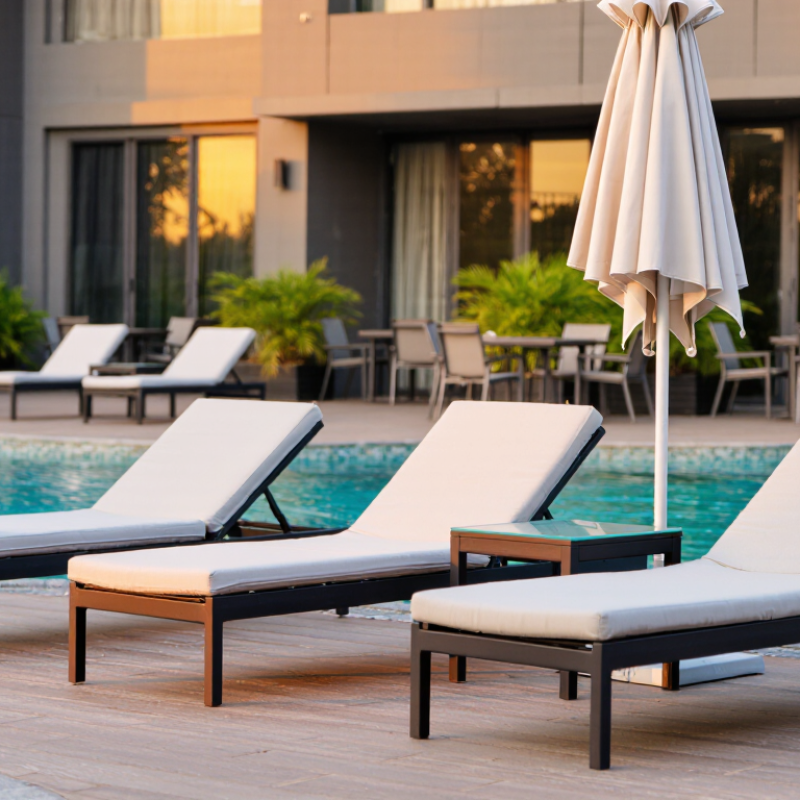
Start with the site. Map each patio zone by guest count, sun exposure, prevailing wind, and service route. NOAA’s 1991–2020 U.S. Climate Normals provide 30-year station records for monthly temperature and precipitation. Use the nearest station to identify likely heat, rainfall, and freeze conditions. A shaded breakfast terrace needs different cushions from a pool deck exposed to midday sun. Measure table spacing and chair pull-back room at peak occupancy, not just on a floor plan.
Turn those observations into measurable requirements: frame material, fabric cleanability, drainage, stackability, and replacement-part availability. For coastal sites, ask for corrosion-test documentation. ASTM B117 describes a salt-fog test, but test hours do not translate directly into years outdoors. Request the test method and results, plus written care guidance. One easy-to-miss detail: dark surfaces can become uncomfortable in direct sun, even when they look refined in a sample room. Test samples outdoors before approving a full order.
Tips: Photograph the patio at morning, noon, and evening. Record where water pools after rain. Ask staff to trial a sample chair during a real service shift; comfort and movement can surprise you.
| Planning Dimension | What to Define | Practical Requirement or Planning Guide | Why It Matters | What to Ask the Supplier |
|---|---|---|---|---|
| Guest use and capacity | Dining, lounging, poolside seating, events, or a combination | Estimate peak seats by zone and account for circulation, service access, and furniture that may need to be moved or stored. | A layout designed around actual guest activities is more usable and easier for staff to maintain. | Can you provide scaled layouts showing seating capacity, clear paths, and furniture footprints? |
| Climate and exposure | Sun intensity, rainfall, humidity, temperature swings, wind, pool chemicals, and coastal salt exposure | Match materials and finishes to the site; specify cover, drainage, storage, or wind-management plans where needed. | Outdoor exposure affects fading, corrosion, moisture retention, and maintenance frequency. | Which components are suitable for this exposure, and what care or protection do they require? |
| Frame and hardware | Frame material, joints, fasteners, feet, and replaceable components | Confirm the frame and hardware are specified for outdoor use; for coastal or poolside sites, verify corrosion resistance for the complete assembly. | A durable frame can still fail early if joints, fasteners, or fittings are not suited to the environment. | What are the frame and hardware materials, finish details, and replacement-part options? |
| Textiles and cushions | Fabric, foam, seams, cushion covers, and drying or storage method | Request documented UV and colorfastness performance, water-management details, cleaning instructions, and replaceable covers where available. | Textiles face sunlight, spills, repeated cleaning, and moisture; construction and care both influence service life. | Are performance test results available, and can covers or cushions be replaced separately? |
| Comfort and dimensions | Seat height, seat depth, arm clearance, table height, and intended guest profile | Use full-size samples or dimensioned drawings; check dining-chair and table compatibility rather than selecting each item in isolation. | Comfort and fit affect guest experience, accessibility, and practical use of the space. | Can we review a sample and confirm all finished dimensions before ordering? |
| Accessibility and circulation | Accessible routes, seating options, turning areas, and approach to tables | For U.S. projects, coordinate the layout with applicable accessibility requirements; ADA accessible routes are generally at least 36 inches wide, subject to specific provisions and exceptions. | Furniture placement can obstruct routes even when individual products are suitable. | Can your layout be checked against the project’s local accessibility requirements? |
| Safety and stability | Stability, load information, edges, pinch points, and umbrella compatibility | Request product-specific safety and load documentation; assess umbrellas and lightweight furniture for wind exposure and follow site operating procedures. | Public hospitality settings require clear operating limits and consistent inspection practices. | What safety documentation, assembly instructions, and wind-related use guidance are supplied? |
| Cleaning and operations | Daily cleaning, stain removal, stacking, moving, and off-season storage | Specify approved cleaning methods, stack or nesting requirements, product weight, and storage footprint before selection. | Operationally convenient furniture can reduce handling time and help prevent avoidable damage. | Which cleaners are permitted, and how many pieces can be safely stacked or nested? |
| Warranty and service life | Warranty coverage, exclusions, spare parts, repair process, and expected maintenance | Compare written warranty terms by component and confirm how commercial use, outdoor exposure, and routine maintenance are treated. | Clear terms help estimate ownership costs and avoid assumptions about coverage. | What is covered, for how long, and how are replacement parts ordered? |
| Delivery and total cost | Quantity, lead time, shipping, assembly, installation, packaging removal, and replenishment | Compare complete delivered and installed costs, not just unit prices; confirm production timelines and availability of matching future additions. | Logistics and replacement consistency can affect opening schedules and long-term budget planning. | What is included in the quote, what is the current lead time, and can future orders match the selected finish? |
Planning note: Requirements vary by site, climate, and jurisdiction. Verify product documentation and local code requirements before purchase.
Ask about completed hospitality projects in similar climates, guest volumes, and cleaning routines. Request photos and references. Then ask what changed after installation. A polished catalog tells little.
Test material swatches outdoors. Inspect frame joints and fabric seams. See whether staff can wipe surfaces quickly. Small details, big difference.
Request monthly output, current lead times, and peak-season plans. Ask about phased orders and written shipment milestones. Keep a buffer; busy seasons can surprise even experienced teams.
Check whether one supplier can furnish patios, pool areas, and café spaces. Confirm finishes and replacement parts will remain available. Variety helps, but continuity matters more.
Share a measured layout, including doorways and service paths. Confirm frame finishes, fabrics, and table sizes in a written specification. A slight color mismatch can stand out beside stonework.
Get a delivery window, freight costs, unloading details, and packaging-removal arrangements in writing. Ask what happens if pieces arrive damaged. Dates need follow-through.
Review frames, finishes, and cushions separately. Check exclusions for fading, corrosion, and commercial use. Ask how claims work and whether replacement parts are available. Read the fine print.
Ask who answers questions and their typical response time. Confirm whether assembly guidance and care instructions are included. I might overlook maintenance, too. That can cost more later.
Choosing the right Hotel patio furniture supplier in 2026 starts with understanding how the outdoor space will be used, including its size, climate, guest traffic, and desired style. These needs help define practical requirements for comfort, durability, maintenance, and performance. Compare suppliers by their hospitality experience, product selection, and ability to meet order quantities and timelines. Ask about materials, construction, safety practices, and sustainability so the furniture can withstand regular use while fitting the property’s priorities.
Before making a decision, review customization options, delivery terms, warranty coverage, and after-sales support. Look beyond the purchase price and compare the total cost of ownership, including upkeep, replacement needs, shipping, and expected service life. A dependable supplier should communicate clearly, provide relevant product information, and offer terms that match your project. Careful evaluation helps hotels choose patio furniture that balances appearance, reliability, and long-term value.